
SS-31 and MOTS-c: Exploring Synergistic Mitochondrial Peptides in Research

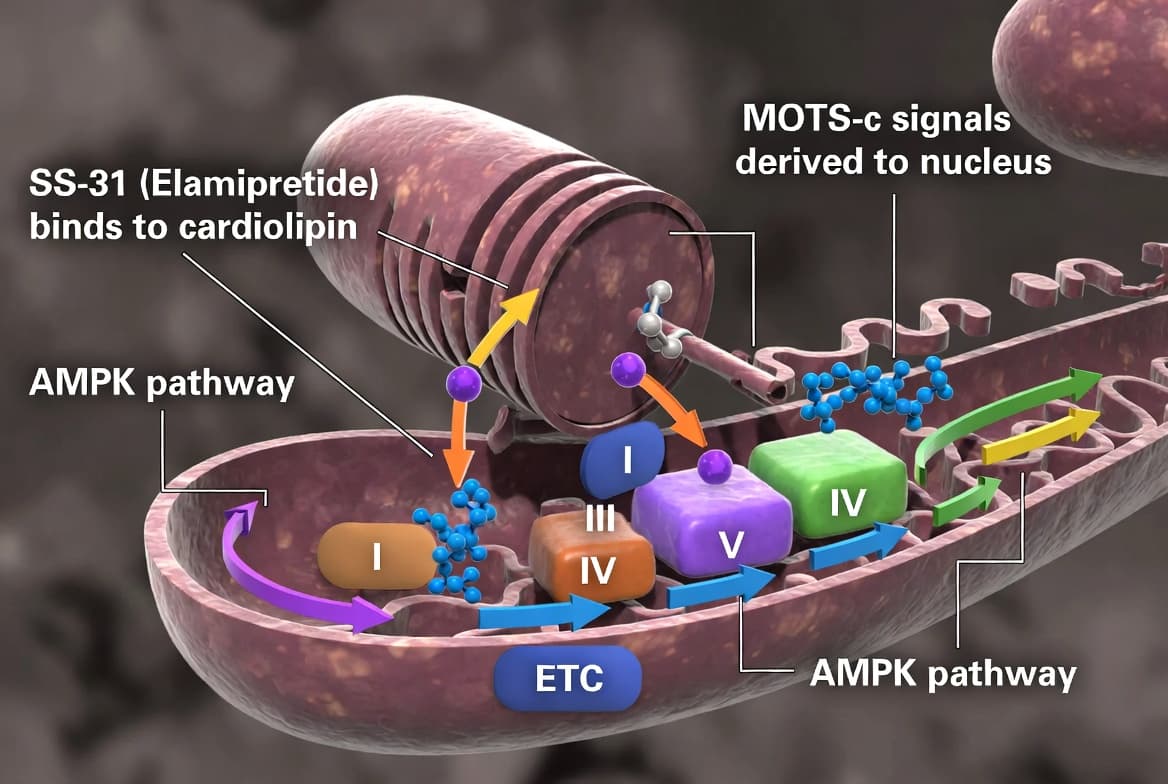
Mitochondria, often called the powerhouses of the cell, produce energy and play key roles in metabolism and cellular health. As we age or face metabolic stress, mitochondrial function can decline, contributing to fatigue, reduced exercise capacity, and other issues observed in research models.[1] Two peptides of interest—SS-31 (also known as Elamipretide) and MOTS-c—have been studied for their potential to support mitochondrial health through different but possibly complementary ways.
SS-31 is a synthetic peptide that targets the mitochondrial membrane directly, while MOTS-c is a naturally occurring peptide encoded in mitochondrial DNA that acts like a metabolic signal.[2][3] Research explores their individual effects and potential synergies in preclinical models. This educational review summarizes mechanisms and findings from peer-reviewed studies. All information is for educational and research purposes only.

What These Peptides Do in Simple Terms
Imagine mitochondria as tiny engines in cells. Over time or under stress, these engines can become damaged or inefficient, leading to lower energy output and higher “exhaust” (reactive oxygen species or ROS). SS-31 research focuses on protecting and optimizing the engine’s internal structure for better efficiency and less damage.[4] MOTS-c research looks at signaling the cell to adapt, burn fuel better, and respond to exercise-like demands.[5] Together in lab studies, they may address both the “hardware” (structure) and “software” (signaling) of mitochondrial function, potentially leading to better cellular energy and resilience in research models of aging or metabolic stress.
Mechanisms of Action
SS-31 (Elamipretide)
- A small synthetic tetrapeptide that selectively concentrates in the inner mitochondrial membrane by binding to cardiolipin, a key lipid.[6]
- Stabilizes cardiolipin-cytochrome c interactions, promoting efficient electron transport, ATP production, and reducing electron leakage that generates ROS.[1]
- Inhibits peroxidation of cardiolipin and opening of the mitochondrial permeability transition pore (mPTP).[7]
- Supports mitochondrial quality control and redox balance, with effects primarily observed in damaged or aged mitochondria.[3]

MOTS-c
- A 16-amino acid peptide encoded directly in the mitochondrial genome (12S rRNA).[2]
- Under stress, it can move to the nucleus and influence gene expression via pathways like AMPK.[8]
- Promotes glucose uptake, fatty acid oxidation, and insulin sensitivity, particularly in skeletal muscle.[5]
- Endogenous levels rise with exercise, supporting its role in metabolic adaptation.[9]

Potential Complementary Research Applications
SS-31’s membrane protection may create a more stable environment for MOTS-c’s metabolic signaling to function effectively. This dual approach is of interest in studies of mitochondrial dysfunction.[10]
Research Findings
Mitochondrial Function and Energy Production
Preclinical studies in aged mice showed that SS-31 (e.g., 3 mg/kg/day for 8 weeks) helped restore ATP production capacity, improved coupling efficiency, reduced oxidative damage markers, and enhanced overall redox balance in skeletal muscle.[3][11] These changes were associated with better exercise endurance. MOTS-c administration in various models supported metabolic flexibility and physical performance improvements.[9]

Metabolic Regulation and Insulin Sensitivity
MOTS-c has been shown in animal models to enhance glucose handling in muscle tissue and counteract aspects of diet-induced insulin resistance through AMPK activation.[2] SS-31’s reduction of mitochondrial ROS may help mitigate oxidative contributions to metabolic stress. Research exploring both together considers broader support for energy homeostasis.[12]
Exercise Capacity, Muscle, and Aging Models
SS-31 treatment improved fatigue resistance and treadmill performance in aged animals.[3] MOTS-c demonstrated exercise-mimetic effects, increasing running capacity and balance in mice of different ages.[9] In simple terms, these findings relate to research interest in maintaining physical function with age.
Neuroprotection and Broader Applications
SS-31 has shown protective effects on mitochondrial and synaptic health in models of cognitive impairment.[6] MOTS-c research indicates roles in reducing inflammation and supporting metabolic resilience in various tissues. Data are mostly from cell and animal studies, with limited human investigations for SS-31 in specific contexts.[8]

Potential Benefits in Research Contexts (Simplified Overview)
In laboratory studies, these peptides are investigated for supporting:
- Cellular energy production (ATP) and reduced oxidative stress.
- Better metabolic handling of glucose and fats.
- Improved physical performance and fatigue resistance in aging or stressed models.
- Overall mitochondrial resilience, which is relevant to many age-related research areas.
Benefits are context-dependent and based on limited preclinical data; human translation remains under exploration.
Summary Comparison Table
| Peptide | Key Mechanism | Research Focus Areas | Evidence Notes |
|---|---|---|---|
| SS-31 | Cardiolipin stabilization | Mitochondrial structure, ROS reduction, exercise tolerance | Strong preclinical; select clinical |
| MOTS-c | AMPK & metabolic signaling | Glucose/fat metabolism, exercise adaptation | Primarily preclinical |
Research Considerations
While individual and combination approaches are of growing interest, most data are from animal and cell models. Dosages and protocols vary by study. More research is needed to understand long-term effects and optimal research designs. Limitations include small sample sizes in some studies and the primarily preclinical nature of MOTS-c data.
Related Research Products
Researchers studying these mitochondrial peptides may find the following options useful for their laboratory work.


Educational Disclaimer: This article is for educational and research purposes only. It summarizes findings from peer-reviewed scientific literature and does not constitute medical advice, diagnosis, or treatment recommendations. Always consult qualified professionals for health-related decisions.