
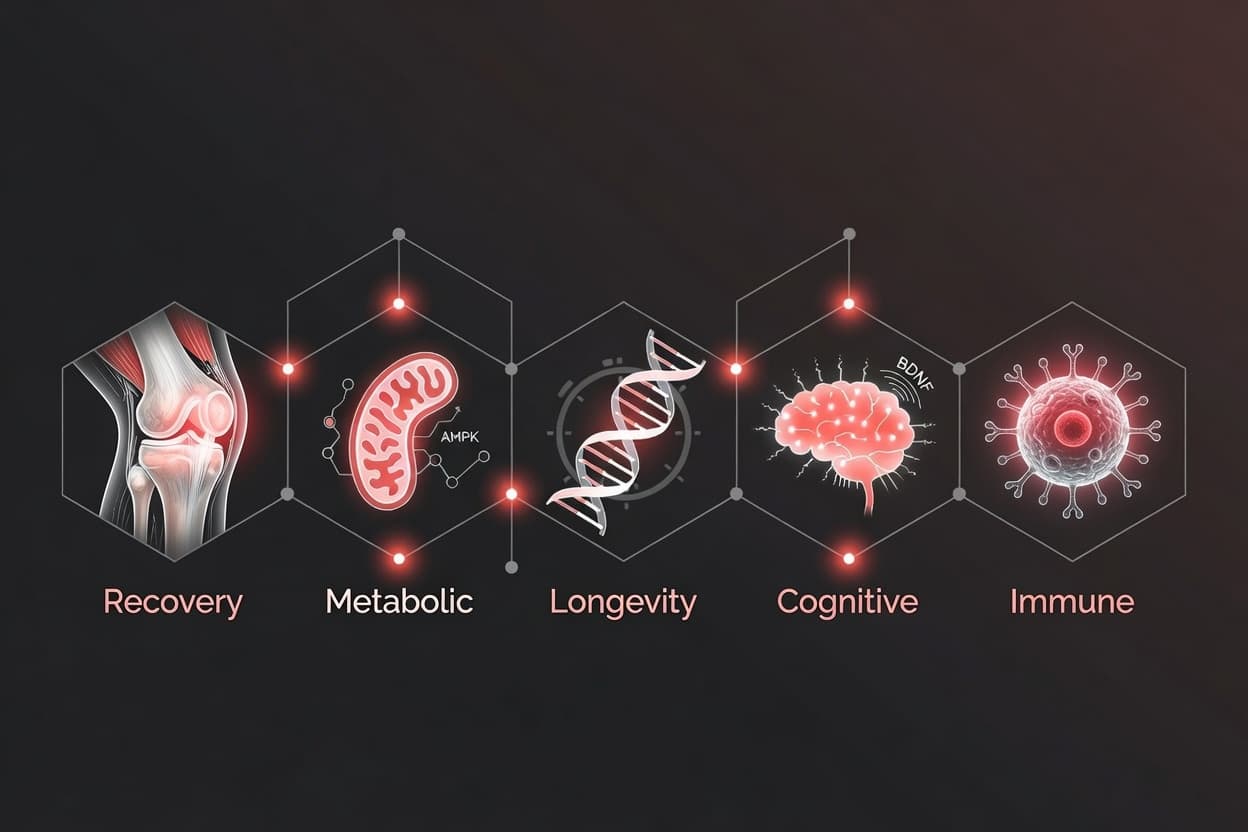

Research Peptide Categories in 2026: Recovery, Metabolic, Longevity, Cognitive & Immune
Research peptides are short chains of amino acids examined in laboratory and preclinical settings for their roles in cellular signaling, tissue processes, metabolic regulation, and related biological pathways. In 2026 the peer-reviewed literature and research community commonly organize these compounds into several primary categories according to the predominant experimental focus of published studies. This overview examines five major categories—Recovery, Metabolic, Longevity, Cognitive, and Immune—drawing exclusively from peer-reviewed sources. All discussion remains strictly within the context of laboratory and preclinical research.
Overview of Research Peptide Categorization in 2026
Peptide research in 2026 continues to group compounds primarily by the biological systems most frequently investigated rather than by chemical structure alone. Overlaps exist—certain peptides appear in more than one category—but the groupings below reflect the dominant research trajectories observed in the peer-reviewed literature. Researchers evaluating these compounds should prioritize primary sources, assess study design rigorously, and maintain appropriate controls for purity and experimental conditions.
Recovery Category: Tissue Repair and Cytoprotection
The Recovery category centers on peptides examined for effects on soft-tissue models, angiogenesis, cell migration, and cytoprotective pathways.
Key compounds include BPC-157 (a 15-amino-acid gastric-derived pentadecapeptide) and TB-500 (a synthetic fragment of thymosin β4). Systematic reviews of BPC-157 literature through 2024–2025 identified dozens of preclinical studies reporting accelerated healing signals in tendon, ligament, muscle, and gut mucosal models, with proposed mechanisms involving growth-hormone receptor upregulation, angiogenesis, and modulation of inflammatory cytokines.[1][2] Human data remain extremely limited and consist primarily of small uncontrolled pilot observations.
TB-500 and its parent compound thymosin β4 have been studied for actin sequestration, endothelial cell migration, and wound-related processes. The parent molecule has generated more human wound-healing data than the fragment itself.[3] GHK-Cu appears frequently in dermal and extracellular-matrix remodeling research and is often discussed alongside the recovery peptides for its gene-modulation and collagen-related findings.

Metabolic Category: Energy Homeostasis and Multi-Receptor Signaling
This category includes compounds investigated for effects on glucose handling, insulin sensitivity, body-composition parameters, and incretin-related pathways.
Retatrutide (a triple agonist targeting GLP-1, GIP, and glucagon receptors) continues to generate substantial clinical-trial literature focused on metabolic outcomes. Mitochondrial-derived peptides such as MOTS-c form another major branch. MOTS-c, a 16-amino-acid peptide encoded in the mitochondrial 12S rRNA, has been shown in rodent models to activate AMPK, improve insulin sensitivity, and influence metabolic flexibility under high-fat diet and aging conditions.[4][5] Human evidence for exogenous MOTS-c administration remains sparse; most available human data are observational correlations with exercise.

Longevity Category: Cellular Aging, Mitochondrial Function, and Geroprotective Pathways
Longevity-focused research examines peptides for potential effects on mitochondrial integrity, telomere-related processes, oxidative stress, and age-associated decline in model systems.
MOTS-c again features prominently due to its mitochondrial origin and reported effects on physical capacity and metabolic resilience in aged mice.[6] Epithalon (a synthetic tetrapeptide) has a long history of research exploring telomerase activity and circadian regulation, though modern controlled human longevity data are lacking. SS-31 (elamipretide) targets cardiolipin on the inner mitochondrial membrane and has advanced further into clinical trials for specific mitochondrial diseases, with mixed results in broader indications.

Cognitive Category: Neurotrophic Signaling and Neuroprotection
Cognitive research peptides are studied primarily for effects on neurotrophic factors, synaptic plasticity, and neuroprotective pathways in preclinical and limited clinical settings.
Semax, a synthetic heptapeptide analog of ACTH(4-10), has been shown in rodent studies to rapidly upregulate BDNF protein and mRNA in the hippocampus, along with TrkB receptor activation.[7][8] Russian clinical literature has examined it in cerebrovascular and cognitive contexts. Selank, a tuftsin analog, is more frequently associated with anxiolytic and immunomodulatory research in the same literature base. Independent Western replication of the human data remains limited.

Immune Category: Modulation of Innate and Adaptive Responses
Immune-category peptides are investigated for effects on T-cell subsets, cytokine balance, dendritic-cell signaling, and antimicrobial activity.
Thymosin Alpha-1 is one of the more extensively studied compounds in this group, with a substantial body of clinical literature examining its effects on immune cell populations, vaccine responses, and infection-related outcomes. It acts in part through Toll-like receptor pathways and has been evaluated in multiple disease contexts.[9][10] KPV (a tripeptide derived from α-MSH) and LL-37 appear in anti-inflammatory and antimicrobial research models.

Comparative Overview
| Category | Representative Compounds | Primary Research Focus | Evidence Base (2026) |
|---|---|---|---|
| Recovery | BPC-157, TB-500, GHK-Cu | Tissue repair, angiogenesis, cytoprotection | Extensive preclinical; limited human |
| Metabolic | Retatrutide, MOTS-c | Glucose/insulin, multi-agonist, AMPK | Strong clinical (incretins); preclinical (MOTS-c) |
| Longevity | MOTS-c, Epithalon, SS-31 | Mitochondrial function, aging models | Mostly preclinical + targeted trials |
| Cognitive | Semax, Selank | BDNF, neuroprotection, anxiolytic pathways | Russian clinical + preclinical |
| Immune | Thymosin Alpha-1, KPV | T-cell modulation, inflammation, antimicrobial | Broader clinical literature |

Research Considerations and Limitations
Across all categories, several consistent limitations appear in the literature:
- Many recovery and longevity peptides rely heavily on animal and in-vitro data.
- Human studies for compounds such as BPC-157, TB-500, and MOTS-c remain small, uncontrolled, or absent for the specific research applications discussed.
- Overlaps between categories (for example MOTS-c appearing in both metabolic and longevity research) require careful interpretation of study design.
- Manufacturing quality, purity, and stability are critical variables in any laboratory research involving synthetic peptides.
Researchers evaluating these compounds should prioritize primary peer-reviewed sources, assess study design rigorously, and maintain appropriate controls for purity and experimental conditions.
References
- Gwyer D, et al. Emerging Use of BPC-157 in Orthopaedic Sports Medicine: A Systematic Review. HSS Journal. 2025. PubMed
- Goldstein AL, et al. Thymosin Beta-4 and TB-500 in Tissue Healing, Regeneration, and Musculoskeletal Repair: A Scoping Review. Applied Sciences. 2026. Full Text
- Lee C, et al. The Mitochondrial-Derived Peptide MOTS-c Promotes Metabolic Homeostasis and Reduces Obesity and Insulin Resistance. Cell Metabolism. 2015. PubMed
- Kim KH, et al. MOTS-c, the Most Recent Mitochondrial Derived Peptide in Human Aging and Age-Related Diseases. International Journal of Molecular Sciences. 2022. PubMed
- Szeto HH. Application Research of Novel Peptide Mitochondrial-Targeted Antioxidant SS-31 in Mitigating Mitochondrial Dysfunction. Mitochondrion. 2024. PubMed
- Chatfield KC, et al. Contemporary Insights into Elamipretide’s Mitochondrial Mechanism of Action and Therapeutic Effects. Biomedicine & Pharmacotherapy. 2025. PubMed
- Dolotov OV, et al. Semax, an Analog of ACTH(4-10) with Cognitive Effects, Regulates BDNF and trkB Expression in the Rat Hippocampus. Brain Research. 2006. PubMed
- Dolotov OV, et al. Semax, an Analogue of Adrenocorticotropin (4-10), Binds Specifically and Increases Levels of Brain-Derived Neurotrophic Factor Protein in Rat Basal Forebrain. Journal of Neurochemistry. 2006. PubMed
- Romani L, et al. Thymosin Alpha 1: An Endogenous Regulator of Inflammation, Immunity, and Tolerance. Annals of the New York Academy of Sciences. 2007. PubMed
- King R, Tuthill C. Immune Modulation with Thymosin Alpha 1 Treatment. Vitamins and Hormones. 2016. PubMed
- Khavinson V, et al. Overview of Epitalon — Highly Bioactive Pineal Tetrapeptide with Promising Properties. International Journal of Molecular Sciences. 2025. PubMed
- Pickart L, Margolina A. Regenerative and Protective Actions of the GHK-Cu Peptide in the Light of the New Gene Data. International Journal of Molecular Sciences. 2018. PubMed
- Siegel RJ, et al. Improving Mitochondrial Function with SS-31 Reverses Age-Related Redox Stress and Improves Exercise Tolerance in Aged Mice. Free Radical Biology and Medicine. 2019. PubMed
- Lee C, et al. MOTS-c Improves Intrinsic Muscle Mitochondrial Bioenergetic Health and Efficiency in a PGC-1α/AMPK-Dependent Manner. Free Radical Biology and Medicine. 2026.
- Al-Dulaimi et al. Epitalon Increases Telomere Length in Human Cell Lines Through Telomerase Upregulation or ALT Activity. Biogerontology. 2025. PubMed
Educational Disclaimer: This article is for educational and research purposes only. It summarizes findings from peer-reviewed scientific literature and does not constitute medical advice, diagnosis, or treatment recommendations. Always consult qualified professionals for health-related decisions.